

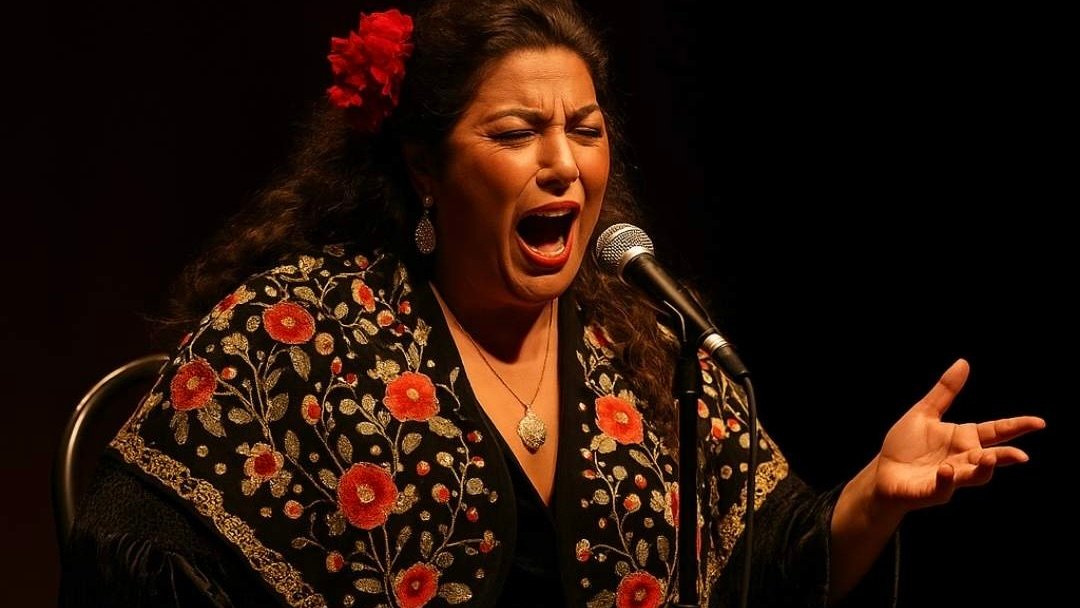
Flamenco Cante is the heart of Flamenco – raw voice, ancient memory, and human emotion woven into sound. It is not simply a style of singing; it is a cry from deep within the soul, shaped by centuries of cultural fusion in Andalusia. For anyone drawn to Spain’s traditions, understanding Cante Flamenco opens a doorway into the emotional, historical, and spiritual essence of this art form.
Across tablaos, peñas, and village streets, the voice has always carried the first stories of Flamenco. Before the guitar, before the dance, before the stage lights, there was only the human voice – unfiltered, imperfect, trembling, fierce. Cante is where the soul speaks more clearly than words ever could.
In this article, I share the powerful truths behind Cante Flamenco, shaped not only by research but also by my own artistic journey across Spain – listening, observing, learning, and absorbing the emotional language that defines Flamenco singing.
What Is Cante Flamenco? (A Quick Overview)
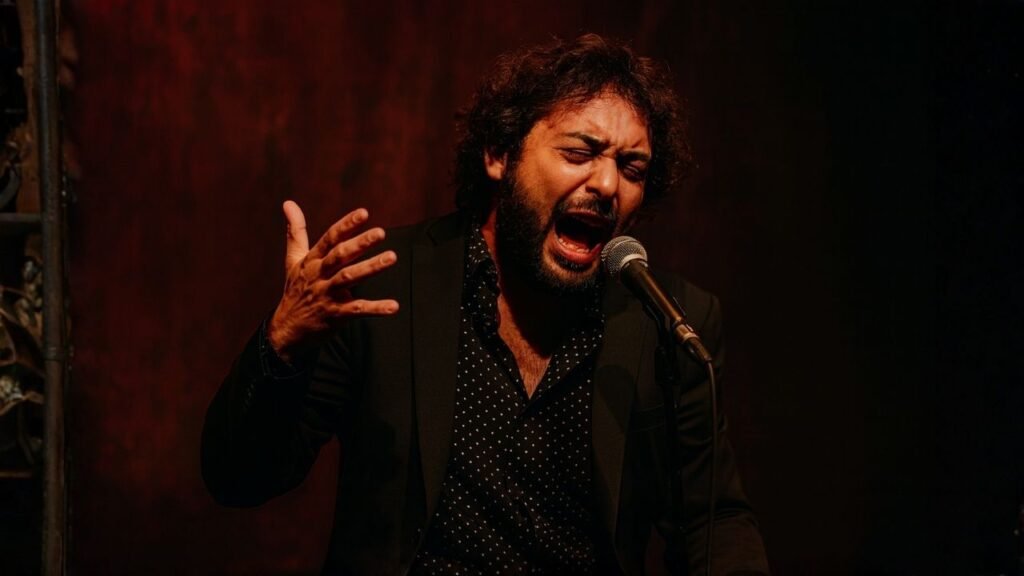
Cante Flamenco – often simply called Cante – is the vocal foundation of Flamenco universe. Its purpose goes far beyond melody. Cante exists to transmit emotion, lived experience, and cultural memory. Every phrase, every breath, every wavering note reflects something deeply human.
Historically, Cante was never meant to be performed on large stages or perfected for audiences. It lived in intimate gatherings – family homes, Andalusian patios, taverns, courtyards, late-night juergas where singing erupted spontaneously from emotion, not choreography.
Unlike many vocal traditions, Flamenco did not begin with formal training, written notation, or academies. It was carried orally, passed down through mothers, grandfathers, neighbors, and community elders, each adding their own interpretation. This oral lineage is why Cante is full of micro-variations, unique textures, and melodic turns inherited through listening rather than structured technique.
What makes Cante so emotionally powerful is its honesty. Singers are not expected to sound “beautiful” by classical standards; they are expected to sound true. The roughness, the cracks, the tension, the lament – they all belong. They are part of Flamenco’s identity as the voice of memory, resilience, and raw expression.
Rooted in Andalusia’s cultural history, Cante Flamenco embodies:
- raw expression
- rhythmic complexity
- emotional release
- spiritual depth (known as duende)
- centuries-old oral tradition
Understanding Cante is essential for understanding Flamenco itself.
History & Origins of Cante Flamenco
Cante Flamenco did not emerge overnight – it was born from centuries of cultural layering, migration, and lived experience across Andalusia. Long before flamenco was recognized as an art form, songs of sorrow, celebration, and storytelling echoed through the streets, taverns, and rural fields of southern Spain. These early forms of vocal expression mixed influences from Andalusian folk music, Romani communities, Sephardic chants, Moorish melodies, and sacred religious traditions.
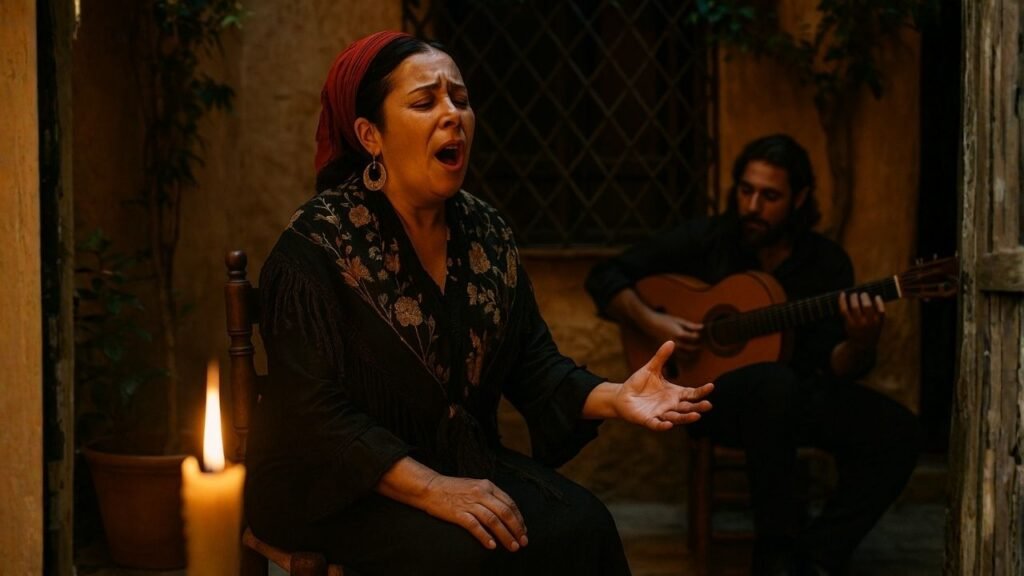
In its earliest days, Cante existed without guitar accompaniment. It was sung in homes, courtyards, and gatherings as a raw, unpolished form of communication. People sang to soothe grief, express longing, mark milestones, and maintain cultural identity. These songs passed down orally – generation to generation – transforming with each singer’s interpretation.
By the 19th century, Cante became a recognized cultural treasure. Cantaores such as El Planeta, La Serneta, and Silverio Franconetti helped shape the early canon of styles we now call palos. What remained constant, however, was the essence: Cante Flamenco as the voice of the people, an art form where the human experience is both preserved and elevated.
While modern Flamenco is celebrated worldwide, its origins can be traced to centuries of cultural blending in southern Spain. Andalusia has been home to a rich mosaic of people: Romani communities, Andalusi Arabs, Sephardic Jews, Castilian peasants, and African influences carried through migration and trade. Each group contributed rhythms, vocal ornaments, scales, and emotional expressions that eventually fused into what we now recognize as Flamenco singing.
The haunting melismas found in some palos reflect Middle Eastern and North African influence. The deep, mournful cries resemble ancient laments found in many Mediterranean cultures. The rhythmic phrasing and emphasis on improvisation echo Romani traditions. Even certain Christmas villancicos and religious chants in Andalusia shaped early forms of Cante.
By the 18th and early 19th centuries, Cante began to formalize as public cafés cantantes (singing cafés) opened across Seville, Cádiz, and Jerez. Legendary singers such as El Planeta, La Serneta, and Silverio Franconetti shaped the early canon of styles and brought Flamenco onto stages. Yet despite this evolution, Cante never lost its essence – intimate, emotional, and grounded in personal truth.
Even today, the roots of Cante can be felt in every phrase. When a cantaor leans into a quejío, it carries echoes of centuries of migration, persecution, celebration, survival, and identity. Cante Flamenco remains not simply a genre but a living archive of Andalusian and Romani heritage.
The 5 Powerful Truths Behind Cante Flamenco
1. Cante Flamenco Begins Where Words End
Flamenco Cante is not about perfect notes – it is about truth. The singer does not simply perform; they confess. Each phrase is a release of something held in the chest: longing, remembrance, anger, devotion. The cracks in the voice, the trembles, the grit – they are not flaws but emotional fingerprints. This is why Cante is often described as “singing from the bones.” It is the purest form of emotional communication in Flamenco.
2. Duende Is the Invisible Force That Moves the Music
The word duende has no direct translation. It is often described as:
- a shiver through the spine
- a force that overtakes the performer
- a mysterious “presence” in the room
- a moment of artistic possession
In Cante Flamenco, duende appears when the singer loses themselves in the emotion. The listener feels it immediately – a quiet stillness, a sharp inhale, a collective holding of breath. Duende is not technique. Duende is truth breaking through sound.
3. Imperfection Is the Beauty of Flamenco Cante
Unlike classical vocal styles, Cante Flamenco embraces roughness. The voice may crack. It may push. It may sound wounded, desperate, joyful, or wild. This is intentional.
Flamenco Cante values emotion over perfection, and it is this rawness that makes the style unforgettable. The power of Cante lies in its humanity, not in flawless execution.
4. Cante Jondo Is the Deepest, Most Soulful Expression
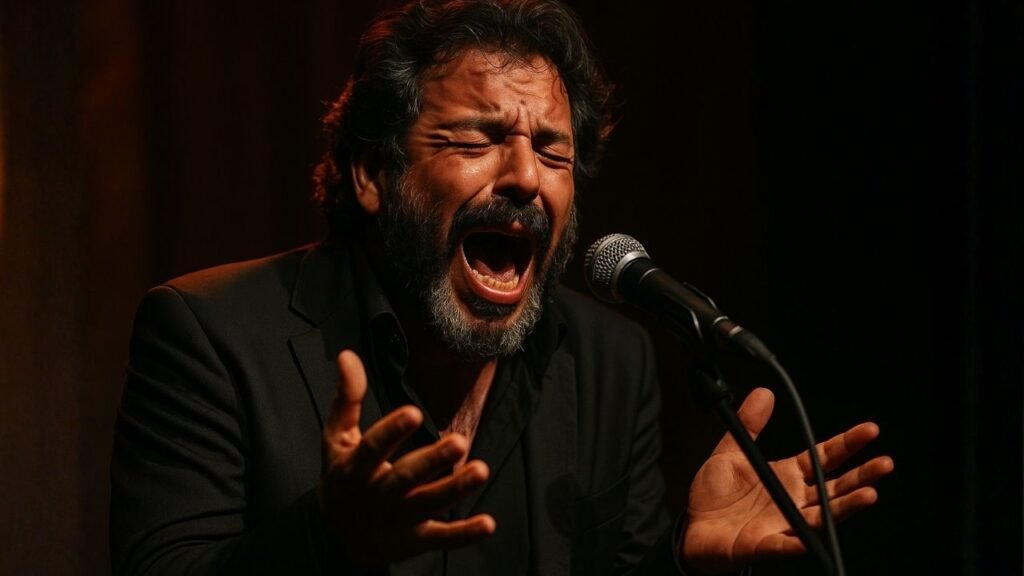
Cante jondo (“deep song”) represents the most profound form of Flamenco singing. Its themes include:
- loss
- sorrow
- longing
- spiritual searching
- collective memory
Performed with minimal accompaniment, Cante jondo strips the art form to its core. The result is a haunting, spiritual experience that reveals Flamenco’s emotional ancestry.
Cante jondo is regarded as the emotional nucleus of Flamenco. Its roots reach back into the oldest vocal traditions of Andalusia and are often associated with deep lament and raw human truth. Unlike lighter forms of cante, jondo is not concerned with entertainment or virtuosity. It is a spiritual offering – a moment where the singer opens the chest and reveals the heaviest stories of the soul.
In cante jondo, time seems to stretch. The phrases unfold slowly, carried by long sustained notes, earthy cries, and a gravity that feels almost sacred. Many describe jondo as a musical prayer, a lament that rises from generations of hardship, migration, and longing. Its emotional weight is not something the singer forces, but something that emerges naturally through life experience and deep connection to the tradition.
Performing cante jondo requires courage. The cantaor or cantaora must enter a vulnerable emotional space, allowing the voice to express pain, memory, and sometimes unresolved sorrow. Because of this, jondo is often considered the most profound form of Flamenco singing – the one that transports both performer and listener into the depths of human feeling.
5. Studying Cante Flamenco Transforms Every Artist
As part of my artistic journey in Spain, studying Cante Flamenco reshaped the way I experience music. I study not only the technique – breath, phrasing, melisma – but also the intention:
- Why this note?
- Why this silence?
- Why this emotional shift?
Even I did not grow up within the Flamenco tradition, learning Cante has deepened my connection to rhythm, expression, and storytelling. It teaches one truth: The voice reveals what the soul cannot hide.
Types of Cante Flamenco
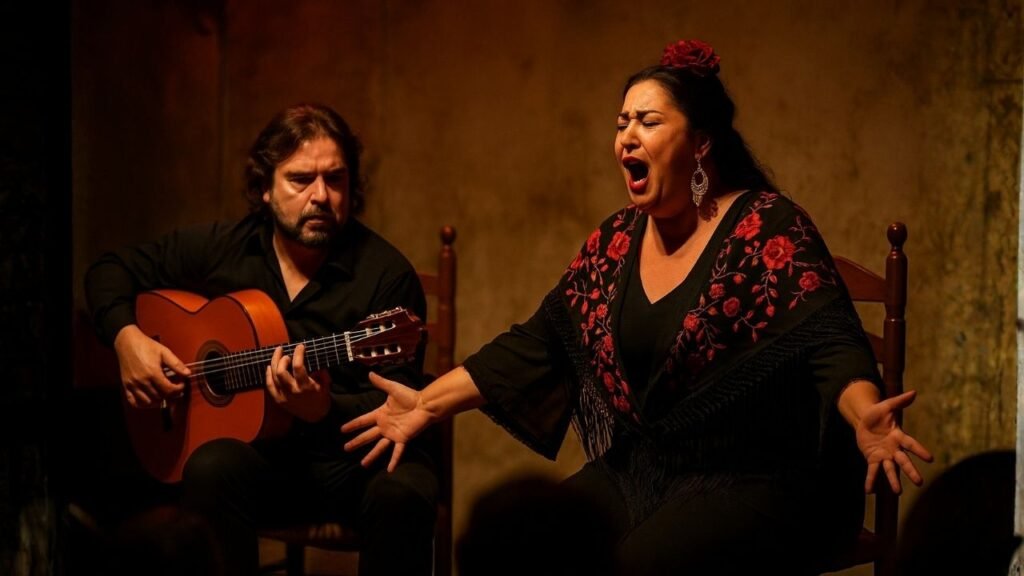
While Flamenco is incredibly diverse, its vocal styles fall into three main categories. Understanding them helps listeners appreciate the emotional depth and musical intention behind each palo.
1. Cante Jondo (Deep Song)
The most profound and ancient form of Flamenco. Themes include death, loss, longing, despair, spiritual suffering, and the heavy weight of memory. Cante Jondo is intense, slow, and emotionally raw, often performed with minimal accompaniment.
Examples of Cante Jondo palos:
2. Cante Chico (Light Song)
More playful, rhythmic, and uplifting. This category includes festive and dance-oriented palos, where the energy is brighter and more spontaneous. Cante Chico embodies celebration, flirtation, humor, and joy.
Examples of Cante Chico palos:
- Alegrias
- Tangos
- Bulerías
- Tientos (often considered between categories)
3. Cante Intermedio (Intermediate Song)
A blend of emotional gravity and melodic accessibility. These palos sit between the depth of Jondo and the lightness of Chico, creating a versatile and expressive middle ground.
Examples of Cante Intermedio palos:
- Fandangos
- Malagueñas
- Granainas
- Tarantas
These categories reflect not only emotion but also history and function. Together they form the backbone of Flamenco’s vast vocal universe.
While the three main categories of cante create a helpful framework, each one contains a wide tapestry of palos with unique histories, regional identities, and emotional tones.
Cante jondo palos like Soleá and Seguiriya demand introspection and emotional honesty. Their melodic patterns often descend, as if sinking into memory or grief. These palos are typically performed with minimal ornamentation, allowing the emotional intensity to shine through.
Cante chico palos such as Tangos or Bulerías bring a completely different energy. They are rhythmic, social, and expressive of joy, humor, or even flirtation. In Andalusian gatherings, these palos often appear late at night when people begin to dance, clap, improvise, and celebrate together.
Cante intermedio bridges the two worlds. Palos like Malagueñas or Granainas have the melodic beauty of lighter forms but carry an emotional depth that resonates powerfully with audiences. These styles give singers space to stretch their phrasing, explore expressive ornamentation, and show emotional clarity without the intensity of jondo.
Together, these categories reveal the diversity of Flamenco singing. They remind us that Flamenco is not only about sorrow or celebration but about the entire spectrum of human life.
The Cultural Importance of Cante Flamenco in Spain
Cante Flamenco is more than an art form – it is a living archive of Spain’s cultural memory. It reflects:
- Andalusia’s diverse heritage (Romani, Moorish, Jewish, Andalusian)
- historical struggles and celebrations
- community traditions such as tablaos and juergas
- regional variations in sound and emotion
Anyone traveling through Spain will quickly notice how deeply rooted Flamenco is in cities like Seville, Granada, Jerez, Cádiz, and Málaga. To truly understand Spain, one must listen to its Cante.
Cante Flamenco lives at the center of Andalusian identity. For many families, cante is not merely music – it is heritage. Children grow up hearing their grandparents sing fragments of soleá while cooking, or listening to tangos during community celebrations. These small, everyday moments keep the tradition alive far more than any large performance ever could.
Across Andalusia, you find peñas flamencas – local Flamenco clubs where artists and enthusiasts gather to practice, perform, and protect the art form. Unlike commercial tablaos, peñas are community spaces that preserve authenticity. A young singer may take their first steps in a peña, guided by elders who carry decades of oral tradition.
Cities like Jerez de la Frontera, Seville, Granada, Cádiz, and Málaga each have their own musical flavor. Jerez is known for its deep, earthy bulerías and passionate singers. Seville carries elegance and tradition, while Granada has a long history connected to the caves of Sacromonte, where Romani families preserved Flamenco through intimate nightly gatherings.
In 2010, UNESCO declared Flamenco an Intangible Cultural Heritage of Humanity. This recognition helped preserve Flamenco culture and encouraged global appreciation for its artistic and historical significance.
Today, Cante Flamenco continues evolving. Contemporary singers honor tradition while experimenting with new interpretations, blending Flamenco with jazz, world music, and modern production. Still, at its core, cante remains what it has always been – the voice of the people.
The Role of Compás in Cante Flamenco
Although Flamenco singing can sound free and improvised, it is always guided by compás – the rhythmic heart of Flamenco. Even in styles that appear slow or ornamental, the singer is constantly feeling the invisible pulse underneath the phrasing. This internal rhythm shapes when a singer enters, how long a note stretches, and where emotional emphasis falls. Understanding compás is essential for interpreting any palo, because it connects the voice with the guitar, the palmas, and the dancers. Without compás, the emotion has no structure; with it, the expression becomes both grounded and powerful.
Conclusion – The Voice That Carries a Culture
Cante Flamenco is not just singing. It is emotion, memory, and humanity shaped into sound. Whether whispered or cried out, whether trembling or fierce, Cante reveals something universal: Every story deserves to be heard. For me, continuing this journey through Spain – learning, listening, absorbing – is a way to connect to a living tradition that still breathes through every singer, every street, every deep note of Cante jondo.
Cante Flamenco reminds us that the human voice is one of the most powerful instruments in existence. With nothing but breath, emotion, and intention, a singer can move audiences across generations and cultures. Whether whispered softly or cried out with force, Cante reveals what words alone cannot express.
For me, exploring the world of Cante Flamenco has been transformative. It changed how I listen, how I breathe, how I phrase, and how I tell stories through song. The more I learn, the more I understand how vast and profound this art form truly is. Every palo contains a universe. Every singer brings their own history. Every performance feels like a moment suspended in time.
And this is the beauty of Cante Flamenco – it is living, breathing, evolving. It carries the echoes of those who came before while inspiring those who will carry the tradition forward. Flamenco is not merely an art form. It is a heartbeat.
FAQ About Cante Flamenco
1. What makes a good Flamenco singer?
A great cantaor or cantaora embodies emotional honesty, rhythmic instinct, vocal control, and deep understanding of Flamenco’s cultural roots. Authenticity is valued more than technical perfection.
2. Why does Cante Flamenco sound emotional or painful?
Flamenco singing grew from centuries of hardship, migration, and lived experience. Its expressive style – including the “quejío” (lamenting cry) – reflects themes of loss, longing, and spiritual struggle.
3. Can someone who is not Spanish learn Cante Flamenco?
Yes. While the tradition is deeply rooted in Andalusia, singers worldwide learn Cante through immersion, listening, studying compás, and training with Flamenco teachers. Respect for the tradition is essential.
4. What is duende in simple terms?
Duende is the emotional and spiritual force that takes over a performance. It is a moment of artistic truth – felt by both singer and audience – that cannot be forced or rehearsed.
5. Is Cante Flamenco always sad?
Not at all. While many palos express sorrow, others are joyful, festive, or playful. Flamenco contains the full spectrum of human emotion.
6. How long does it take to learn Cante Flamenco?
It depends on the singer. Learning compás, phrasing, and vocal style can take months or years, while mastering the emotional depth and cultural nuances is a lifelong journey.
